Industrial-Grade Methanol: Specialized Production and Application
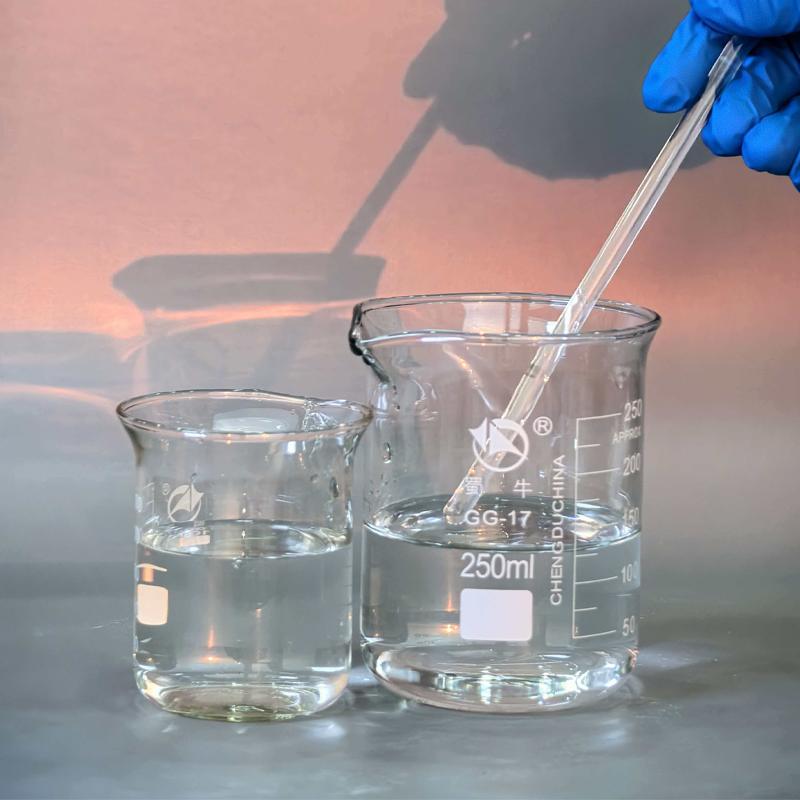
As a modern energy and chemical enterprise integrating R&D, production, and sales, Shandong Jiurunfa Chemical Technology Co., Ltd. has consistently focused on the in-depth development and application expansion of industrial-grade methanol since its establishment. Located within Shandong's Fine Chemical Industry Park, the company leverages the region's abundant coal resources and efficient land-sea transportation network to operate a large-scale production base with an annual capacity of 300,000 tons of methanol. Backed by ISO 9001 quality management system certification and a state-level laboratory, the company has become a key methanol supplier in East China. Its products are exported to over 20 countries and regions across Southeast Asia, Europe, and beyond, establishing the premium “Jiurunfa” brand image in the high-end chemical raw materials market.
Product Characteristics and Process Innovation
Methanol (CAS No.: 67-56-1, chemical formula CH₄O), as the simplest saturated monohydric alcohol, possesses outstanding chemical reactivity and physical properties due to its unique molecular structure. The company's industrial-grade methanol production employs an advanced “coal gasification-syngas purification-low-pressure carbonylation synthesis” process route. Comprehensive product quality enhancements are achieved through the following technological innovations: During syngas preparation, water-coal slurry gasification technology is utilized, elevating feedstock conversion rates to over 98.5%. The purification system employs a combined low-temperature methanol wash and molecular sieve dehydration process, controlling sulfur content in the synthesis gas below 0.1 ppm. The methanol synthesis tower utilizes a shell-and-tube reactor with a high-efficiency catalyst system, achieving a single-pass conversion rate of 65%, a 12 percentage point improvement over traditional processes. These innovations ensure product purity consistently exceeds 99.85%, with moisture content ≤0.1%, acidity (as HCOOH) ≤0.0015%, and evaporation residue ≤0.001%—all key indicators surpassing the GB 338-2011 premium-grade standard.
Precision control of physicochemical parameters demonstrates process excellence: - Density precisely controlled at 0.791±0.002 g/mL at 25°C ensures accurate downstream formulation ratios; - Boiling point stabilized at 64.7°C±0.5°C provides reliable parameters for distillation separation; - Flash point (closed cup method) precisely controlled at 12°C ensures storage and transportation safety; Refractive index (n20D) is strictly maintained within 1.328–1.330, reflecting highly uniform molecular structure. An online near-infrared spectroscopy system enables end-to-end quality monitoring from raw materials to finished products, with critical parameter testing conducted every two hours to ensure product quality fluctuations remain within ±0.05%.
Expansion into Diversified Application Fields
Basic Chemical Synthesis Sector
As a fundamental feedstock for C1 chemicals, our products have deeply penetrated various organic chemical segments: In formaldehyde production, the 37% formaldehyde solution prepared using our methanol exhibits low free acid content (≤0.05%) and minimal sedimentation, making it particularly suitable for urea-formaldehyde resin synthesis; In acetic acid production, the methanol carbonylation process achieves an acetic acid yield of 99.2%, exceeding the industry average by 3 percentage points. In the production of chloroform series products (monochloromethane, dichloromethane, trichloromethane), high-purity methanol effectively reduces byproduct formation, elevating product purity to 99.9%. The company's specialty methanol products tailored for specific applications—such as “polymer-grade methanol” (moisture ≤50ppm) and “pharmaceutical-grade methanol” (UV transmittance ≥99%)—have been successfully deployed in high-end manufacturing sectors including polyformaldehyde resin and vitamin B1 production.
Clean Energy Applications
Amid the energy transition, methanol's clean energy attributes are being fully leveraged: The M15 methanol gasoline blend component, jointly developed with multiple new energy enterprises, incorporates proprietary modifiers to resolve phase separation and corrosion issues in methanol-blended fuels. It is currently piloted at over ten gas stations across East China. In marine fuel applications, low-sulfur methanol products (sulfur content ≤10ppm) have achieved IMO 2020 compliance certification, offering a compliant alternative fuel option for ocean-going vessels. The company's methanol reforming hydrogen production technology achieves a methanol conversion rate of 99.9% and hydrogen purity of 99.999%, delivering an efficient hydrogen source solution for fuel cell vehicles. In 2023, a methanol-to-hydrogen demonstration station jointly established with a new energy vehicle manufacturer achieved a hydrogen production capacity of 300Nm³ per hour.
Fine Chemicals and Emerging Materials Sector
In pesticide production, methanol serves as a critical solvent and intermediate for synthesizing highly effective, low-toxicity pesticides like methamidophos and carbendazim. The company's low-aromatic methanol (benzene content ≤0.001%) effectively reduces pesticide residue risks. In pharmaceuticals, methanol functions as a crystallization solvent for penicillin and cephalosporin antibiotics, with products meeting USP/EP pharmacopoeia standards. In the new materials sector, the methanol oxidation technology for producing dimethyl oxalate has achieved industrial-scale application, supplying a key raw material for the biodegradable plastic PBS. Notably, the company's ultra-high-purity methanol (99.99%) has been successfully applied as a photoresist solvent, breaking foreign monopolies in semiconductor manufacturing.
Full-Chain Safety Management System
Safety Production Technical Specifications
The company has established a full-lifecycle safety management system covering production, storage, and transportation:
- Triple safety barriers are deployed across the plant premises, including:
- DCS automated control systems for real-time monitoring of process parameters
- SIS safety instrumented systems ensuring critical equipment emergency shutdown response time < 1 second
- Intelligent patrol robots conducting 24/7 uninterrupted monitoring Addressing methanol vapor's explosive mixture properties with air (explosion limits: 6.0%-36.5% by volume), production workshops employ positive pressure ventilation. The oxygen content online monitoring system's alarm threshold is set at 19.5%-23.5%, complemented by intrinsically safe explosion-proof electrical equipment (Ex d IIB T2 Gb).
Warehousing and Logistics Safety Standards
Raw material and finished product warehouses adhere to the “Four Protections and One Ventilation” design standard (fire prevention, explosion prevention, static electricity prevention, lightning protection, forced ventilation). Storage tank areas feature dual protection with hydraulic safety valves and flame arresters, while breather valves are pressure-controlled between -0.5 kPa and +1.5 kPa. The 5000m³ vertical storage tank features a double-walled structure with leakage monitoring sensors installed in the interlayer. The nitrogen blanketing system maintains oxygen content within the tank below 2%. Transportation strictly adheres to the “Regulations for the Road Transport of Dangerous Goods,” utilizing ATEX-certified aluminum alloy tank trucks. Each tank is fitted with emergency shut-off valves, static grounding devices, and GPS tracking systems. Every transport vehicle carries four 4kg dry powder fire extinguishers, a 30L fire sand box, and specialized leak-absorbent cotton.
Occupational Health Protection System
Addressing methanol's toxic properties (LD50: 5628 mg/kg, oral, rat), the company has established a comprehensive occupational health surveillance system:
- Work areas employ combined local exhaust and general ventilation systems to maintain methanol vapor concentrations below PC-TWA 20mg/m³; Operators are equipped with self-filtering respirators (P-A-1 type), nitrile rubber protective gloves (thickness ≥0.4mm), and chemical-resistant safety footwear. Eye wash stations and emergency shower facilities are installed with a response time <10 seconds. Annual occupational health examinations are conducted for exposed personnel, with individual health records maintained. Regular methanol poisoning emergency drills are performed, reducing response time to under 8 minutes.
Technical Support and Quality Assurance
R&D Innovation Platform
The provincial-level enterprise technology center established by the company features a 3,000㎡ R&D base equipped with 56 sets of advanced analytical instruments, including a gas chromatography-mass spectrometry system (GC-MS 7890B-5977A), Karl Fischer moisture analyzer (accuracy 0.1ppm), and inductively coupled plasma mass spectrometer (ICP-MS). The R&D team comprises 2 PhDs and 15 masters. In collaboration with East China University of Science and Technology, the company has established the “Joint Laboratory for Downstream Applications of Methanol,” focusing on developing technologies for producing high-value-added chemicals from methanol. Over the past three years, cumulative R&D investment exceeded RMB 120 million, resulting in 12 invention patents (including “A Low-Energy Methanol Distillation Process”) and 35 utility model patents. Among these, the “Methanol Synthesis Catalyst Deactivation Early Warning System” extends catalyst lifespan to 18 months and reduces production costs by 12%.
Quality Control System
The company has implemented a “three-tier quality inspection” system from raw materials to finished products:
- Incoming coal must pass 28 tests including industrial analysis and elemental analysis; Six quality control points are established during production with real-time online monitoring of key indicators; Finished products undergo “batch-by-batch testing,” with each batch meeting 16 criteria including purity, moisture content, acidity, evaporation residue, and color (platinum-cobalt color number ≤5). The quality traceability system records comprehensive data throughout the entire process from synthesis to delivery. Each packaging unit carries a unique traceability code enabling access to production batches, inspection reports, and transportation records. The company's laboratory holds CNAS accreditation, ensuring internationally recognized testing data that meets global standards such as ASTM D1152 and EN 15376.
Supply Chain Management Optimization
To achieve efficient distribution, the company has established a “three-in-one” logistics network:
- Road transport relies on 30 dedicated tank trucks, enabling direct delivery within 48 hours across a 500-kilometer radius.
- Rail transport connects to the Beijing-Shanghai mainline via a dedicated industrial park line, operating scheduled freight trains to the Yangtze River Delta region.
- Maritime services partner with COSCO Shipping to establish a methanol distribution center at Qingdao Port, reducing bulk carrier transportation costs by 15%. The intelligent supply chain system monitors inventory in real time, automatically triggering replenishment when regional stock falls below safety thresholds. By analyzing historical customer consumption patterns through big data, it enables “predictive replenishment,” boosting customer inventory turnover rates by 20%.
Future Development Strategy
Green Production Upgrade
The company's ongoing Carbon Capture, Utilization, and Storage (CCUS) retrofit project involves a ¥230 million investment to build a methanol synthesis system processing 100,000 tons of CO₂ annually. By catalytically synthesizing CO₂ from industrial waste gases with hydrogen, this system reduces carbon emissions by 40% while increasing methanol production by 30,000 tons per year. This technology utilizes a proprietary Cu-Zn-Al catalyst, achieving a CO₂ conversion rate of 38% at 220°C and 3.0 MPa, with methanol selectivity exceeding 95%. The project is scheduled for commissioning in Q3 2024, positioning the company as China's first methanol producer to achieve large-scale CCUS application.
Industrial Chain Extension Strategy
To enhance risk resilience, the company plans downstream methanol projects: investing RMB 500 million to build a 200,000-ton-per-year formaldehyde and 100,000-ton-per-year urea-formaldehyde resin production line, utilizing self-produced methanol to increase product value-added by 50%; collaborating with new energy enterprises to construct a 50,000-ton-per-year DME (dimethyl ether) project, developing clean fuels to replace liquefied petroleum gas; A planned methanol-to-propylene pilot project targets the high-end polyolefin market, with process package development expected by 2025. Through industrial chain expansion, the company will transition from a single raw material supplier to a comprehensive chemical services provider.
Global Market Expansion
Building upon its domestic market foundation, the company has established a clear international expansion strategy: In Southeast Asia, it has formed a joint venture with an Indonesian chemical group to construct a 150,000-ton-per-year methanol deep processing base, circumventing trade barriers; In Europe, it focuses on developing certified bio-methanol products to meet the requirements of the EU Renewable Energy Directive (RED II); In North America, it has obtained FDA certification to enter the pharmaceutical-grade methanol niche market. By 2026, the company aims to increase exports to 35% of total sales, serve customers across 50 countries and regions, and establish an internationally competitive methanol brand.
Facing the historic opportunities presented by the global energy transition and chemical industry upgrade, Shandong Jiurunfa Chemical Technology Co., Ltd. will steadfastly uphold the philosophy of “innovation-driven, green development.” Through technological innovation, quality enhancement, and industrial chain synergy, the company is committed to becoming a globally leading methanol solutions provider. It will continuously refine its value creation system from R&D to services, collaborate with upstream and downstream partners to build a sustainable industrial ecosystem, and contribute significantly to advancing the green transformation of the chemical industry and the high-quality development of regional economies.
67 56 1 cas number
methanol for methyl alcohol
sigma aldrich methanol
methanol chemical suppliers
methanol products
methanol 67 56 1 sds
cas 67 56 1sds
what is methanol