Hydroxypropyl methyl cellulose (HPMC) 9004-65-3 3912900000
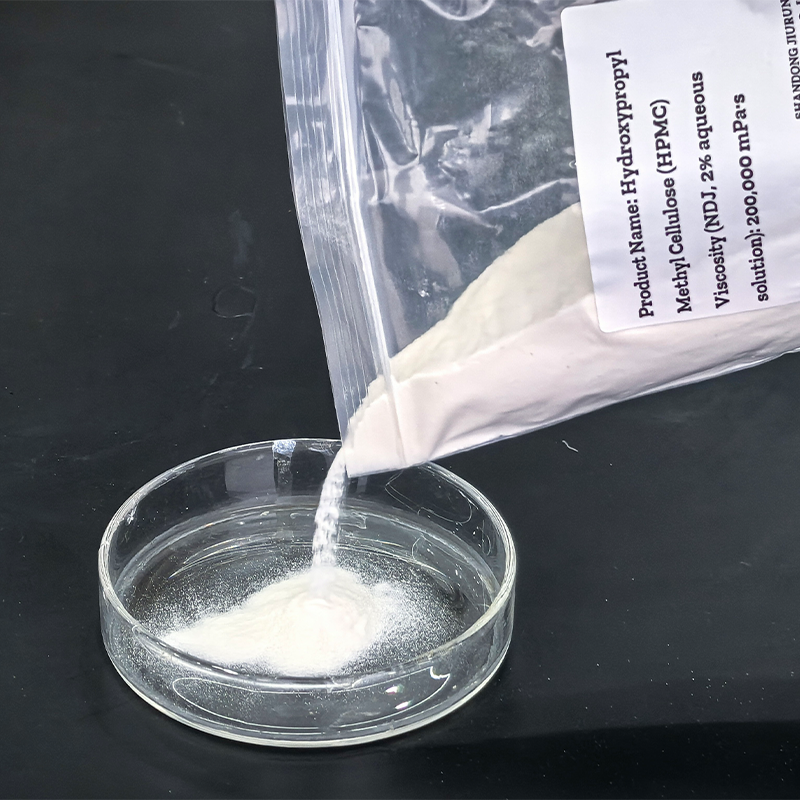
When mixing tile adhesive at construction sites, workers always notice that white powder. Once added, the originally thin mortar instantly becomes thick and slippery, preventing tiles from sliding off walls. In putty powder production workshops, this white powder is also an essential additive. After adding it, applying putty to walls becomes smooth and effortless, and the dried putty layer remains firm without powdering. This white powder is hydroxypropyl methylcellulose, commonly abbreviated as HPMC in the industry. The HPMC product supplied by Shandong Jiurunfa, CAS No. 9004-65-3, Customs Code 3912900000, is precisely such a functional additive—used in small quantities yet playing a decisive role in dry-mix mortars and architectural coatings.
HPMC is produced by etherifying and modifying cellulose extracted from natural cotton or wood pulp. While natural cellulose is insoluble in water, hydroxypropyl and methyl substitution transforms it into a white powder soluble in cold water. When HPMC is added to cement-based or gypsum-based dry-mix mortar and mixed with water, the powder particles rapidly absorb water and swell. Their molecular chains extend and open, forming a transparent three-dimensional network structure. This network firmly traps free water, preventing easy loss while significantly increasing the paste's viscosity, making it thick and viscous. This dual action of water retention and thickening is precisely why HPMC has become an indispensable functional partner in modern building materials.
Water retention is HPMC's core function. When cement and water mix, a hydration reaction occurs, forming a gel that binds aggregates together—a process requiring sufficient moisture. Premature evaporation or absorption by the substrate can cause incomplete hydration, resulting in insufficient mortar strength, hollows, and cracks. This moisture loss is particularly rapid in ordinary mortar when applied to aerated concrete walls or during hot, dry weather. The network structure formed by our HPMC significantly reduces water migration within the mortar, retaining most moisture within the paste to ensure complete cement hydration. Even when applied to highly absorbent substrates, workers have ample time for leveling and finishing without rushing due to premature drying.
Thickening is equally crucial. If mortar is too thin during tile installation, tiles may gradually slide out of position. Similarly, excessively thin mortar during wall skim coating causes sagging and uneven surfaces. Our HPMC significantly increases mortar viscosity, achieving optimal yield stress. This ensures tiles remain securely in place and skim coat maintains consistent thickness. This thickening effect also delivers excellent workability. Workers find the mortar smooth and effortless to apply with a trowel, and it minimizes tool clogging, significantly boosting efficiency. Superior workability fosters positive word-of-mouth among craftsmen and is a key factor in a building material's market appeal.
Extended open time is another significant benefit provided by HPMC. Open time refers to the usable window after mortar mixing. Conventional mortar begins drying and hardening within half an hour if unused, leading to material waste. HPMC-enhanced mortar maintains superior water retention, preventing moisture loss and extending open time to two to three hours or longer. On construction sites, a single bucket of mortar can be used throughout the morning, with consistent quality maintained throughout. When laying large-format tiles, workers can repeatedly adjust tile positions without worrying about mortar drying too quickly, ensuring tile flatness and uniform grout joints. This flexibility is crucial for guaranteeing construction quality and minimizing material waste.
Different building materials have distinct requirements for HPMC. Tile adhesives demand high water retention and appropriate viscosity to ensure secure bonding without slippage. Our HPMC offers specialized formulations for tile adhesives, achieving water retention rates exceeding 98%. For joint compounds, excellent workability and sandability are essential. Our HPMC provides a smooth application feel while ensuring the dried compound layer sands effortlessly. Insulation board adhesive mortar requires strong bonding strength. Our HPMC exhibits excellent compatibility with other additives without compromising final strength. Self-leveling mortar demands good flowability and defoaming properties. We offer surface-treated slow-dissolving HPMC that achieves optimal viscosity within the short application window of self-leveling systems. Cement-based waterproof coatings demand excellent compatibility with emulsion systems. Our specially engineered HPMC prevents emulsion breakdown and flocculation. We offer tailored product lines for each application, enabling building material manufacturers to select the optimal grade for their specific formulations.
Another key advantage of HPMC is its stability. As a nonionic cellulose ether, it remains unaffected by calcium and magnesium ions in water and does not react adversely with other cement components. It maintains stable performance across a wide pH range, ensuring reliable use in both acidic and alkaline systems. Additionally, HPMC exhibits resistance to enzymatic degradation, preventing microbial-induced breakdown during storage and application. These stability characteristics enhance the quality assurance of building materials, minimizing performance fluctuations caused by water quality or environmental changes.
Shandong Jiurunfa Chemical Technology Co., Ltd. operates at https://chemical-sales.com/. Headquartered in Jinan Economic Development Zone, the company occupies over 600 acres and employs a professional technical team comprising PhDs and Masters. Through deep collaboration with Beijing Chemical Industry Group, we have accumulated extensive expertise in production technology and application development for cellulose ethers like HPMC. Our products undergo multiple inspection procedures from raw material intake to finished goods shipment, ensuring precise and consistent specifications for each batch—including methoxy content, hydroxypropoxy content, viscosity, and gel temperature. Choosing our HPMC means selecting construction materials with stable, reliable performance and quality assurance that stands up to market scrutiny.
hydroxypropyl methylcellulose eye drops
hydroxypropyl methylcellulose dangers
microcrystalline cellulose
hydroxypropyl methylcellulose side effects
hydroxypropyl cellulose
is hydroxypropyl methylcellulose safe to eat
hydroxypropyl methylcellulose uses
hydroxypropyl methylcellulose brand name